

Everyone in cycling is chasing watts. But, most of us, or at least in my case, chasing watts seems to cost money, and I do not have an infinite money supply to help alleviate my never-ending hunger for watts. Where does one start?
So here’s an attempt at ranking where your money, time, and effort actually goes furthest. All watt figures are approximate and where possible I tried capturing the numbers that are shared around the same speed, in this case measured at around 40 km/h. Note that the faster you go, the bigger the gains get; and the slower, the smaller! Take the numbers as honest ballparks. As I get smarter, or new data comes out, I will possibly come back to this post and update the numbers.
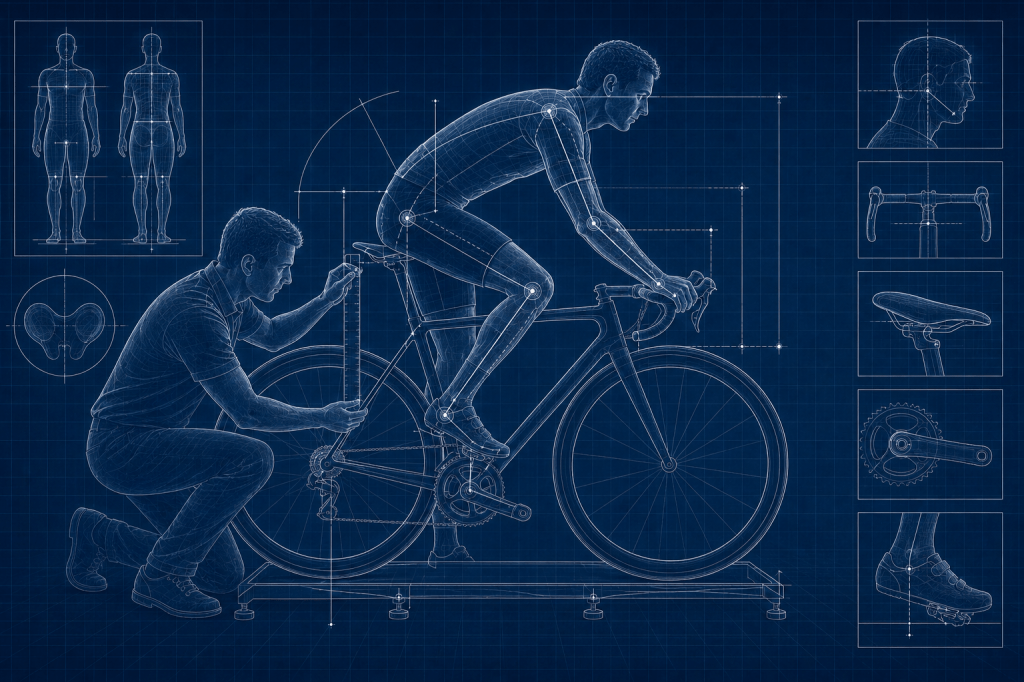
1. Bike fit and body position (up to 60 watts)
This is the big one. Seventy percent or more of the drag a cyclist faces comes from the rider’s body, not the bike. Getting lower, getting narrower, dropping your head, closing the gap between your torso and your thighs these are the changes that move the needle. A proper professional bike fit can save anywhere from 20 to 60 watts depending on how suboptimal your starting point is! The cost of a good fit ranges from €150 to €400. Nothing else on this list comes close to the return on that investment.
2. Skinsuit vs. regular jersey and bibs (15 to 25 watts)
Your body is the biggest surface area hitting the wind. What you drape over it matters enormously. A well-fitted skinsuit versus a regular jersey and bib shorts saves around 15 to 25 watts in wind tunnel testing. The flapping fabric of a normal jersey is basically horrible for watts. A skinsuit is not cheap, running €150 to €250 for a decent one, but in pure watts-per-euro terms it is one of the best purchases you can make and a no-brainer if you are chasing watts.
3. Shaving your legs (~15 watts)
This one genuinely surprised me. And now I have the smoothest of legs on race day 🙂 Cost: a razor and some shaving cream?
4. Aero helmet vs. standard road helmet (10 to 15 watts)
A good aero helmet versus a well-vented standard road helmet saves around 10 to 15 watts. Silca puts the figure at around 15 watts; The helmet aerodynamics are highly personal, the shape of your head, the in particular the angle you hold it at, and your riding position dramatically affect how much you actually gain.
5. Narrower handlebars (10 to 18 watts)
Going from a wide 42cm bar to something around 36 to 38cm narrows your frontal profile meaningfully. Even a modest 4cm reduction in width is worth around 10 watts in most tests. This is also one of the cheaper upgrades on the list, a new bar can run €50 to €150. The caveat is that going too narrow too fast will mess with your handling (it can feel rather aggressive if you are not used to it, I was not a fan personally and gave the watts back in return for the more relaxed ride).
6. Aero road bike frame vs. standard frame (10 to 15 watts)
Now, obviously this is an expensive one. I am not suggesting you just swap your entire frame for the watts. But rather, say you are looking for a new bike, at least keep this in mind. Unsurprisingly an aero frame is… more aero. An aero frame versus a standard round-tube endurance frame saves roughly 10 to 15 watts in most independent testing. At €3,000 to €8,000 for a new frameset, the cost-per-watt ratio is brutal compared to everything above on this list.
7. Deep carbon wheels vs. shallow alloy (5 to 10 watts)
Deep section carbon wheels save around 5 to 10 watts over shallow alloy rims in most wind tunnel data. They look mad cool however, and that is also worth something 🙂 For flat, sheltered courses they’re genuinely faster. For hilly or windy rides, the weight penalty of some deep carbon wheels cancels a meaningful chunk of the aero gain. Also €1,000 to €2,500, which is a lot per watt compared to a skinsuit.
8. Fast tires (5 to 10 watts)
I should probably put this one up higher on the list, it is cheap and easy, and you can immediately feel the difference. Rolling resistance is the main force working against you besides aerodynamic drag, and tire choice has a bigger effect on it than most people realize. The difference between a slow training tire and a fast race tire like a Continental GP5000 or Vittoria Corsa can be 5 to 10 watts per pair, with some testing showing up to 15 watts difference between the fastest and slowest tires available. At €50 to €80 per tire for the good ones, this is excellent value per watt.
9. Correct tire pressure (5 to 10 watts)
Which brings us conveniently to the next point here. Running your tires significantly under-inflated costs around 10 watts. The optimal pressure depends on your weight, your tire width, and the road surface. Most modern tire brands publish pressure calculators. This costs nothing and takes two minutes.
10. Aero jersey vs. standard jersey (10 to 15 watts)
If a full skinsuit isn’t practical for your riding, a well-designed aero jersey is a meaningful middle ground. Not as much as a skinsuit but not far off, and much more practical for sunday racing where you’re out there for six hours.
11. Hot wax chain lube vs. standard oil lube (5 to 10 watts)
Drivetrain friction is a real. Zero Friction Cycling’s independent lab testing found that the difference between a dirty chain with cheap lube and a clean, freshly waxed chain can be 5 to 10 watts, with Silca putting the figure at up to 12 watts in their testing.
12. Aero overshoes or tall aero socks (5 to 8 watts)
These things exist for one reason only, to make you more aero. So not surprisingly, they save you some watts. Your shoes and lower legs are more aerodynamically disruptive than you’d expect. Aero overshoes are worth around 8 watts in wind tunnel testing. Tall aero socks save around 5 watts. Aero socks are maybe €30 to €50? Overshoes around €60 to €80.
13. Aero bar/stem combo vs. round bar and separate stem (5 to 10 watts)
Integrated aero bar and stem units clean up the front end of the bike significantly, and they look very, very cool. If your bike didn’t come with them, the integrated bar/stem units prices fall in a rather large range, roughly €300 to €600?
14. Eyewear (1 to 3 watts)
Your eye sockets and eyebrows are turbulence generators and a decent pair of aero cycling glasses smooths the airflow over them. The figures are small and I can not really find glass manufacturers giving actual numbers of the savings, they do say they are “more aero” but not how much more.. Seems that the internet puts it around 1 to 3 watts. Don;t by glasses because they are aero, buy them because they protect your eyes. If you’re going to wear them anyway, wear aero ones?
15. Arm warmers or long-sleeve skinsuit vs. bare arms (3 to 5 watts)
Arm warmers or a long-sleeve suit save 3 to 5 watts over bare arms in wind tunnel testing. For cooler Belgian mornings this is a free upgrade anyway. Worth knowing even in warmer conditions if you’re chasing every second. I wear them year round, in winter for the heat, and in summer for added UPF protection.
16. Aero water bottle position (3 to 5 watts)
Unsurprisingly, a streamlined aero bottle is more aero than a standard round one. And for that matter, removing bottles entirely from the bike and carrying nutrition in jersey pockets saves a small but measurable amount as well. Silca estimates that bottle placement and type can affect drag by 3 to 5 watts.
17. Ceramic bearings (2 to 5 watts)
Ceramic bearings in your wheels and bottom bracket reduce mechanical friction. The claims vary wildly between manufacturers and independent testing. At €200 to €600 for a full set of ceramic bearing upgrades, the cost-per-watt is not great compared to most things above this on the list.
18. Latex inner tubes vs. butyl (3 to 5 watts)
Latex tubes flex more easily than butyl, which reduces rolling resistance, making latex tubes one of the most cost-effective individual upgrades you can buy. The downsides to them is that they deflate faster overnight so you need to pump up before every ride, they’re also significantly more fragile, and they can be a pain to fit. But 5 watts per wheel for €15 is hard to ignore.
19. Shaving arms (2 to 3 watts)
I dare not venture in this territory, however, watts are watts, I guess. Not for everyone. No judgement either way.
20. Aero visor (1 to 2 watts)
At the very bottom of the list, a visor design versus nothing adds a tiny but measurable gain, mostly by smoothing the transition between your helmet and your face.





Leave a Reply