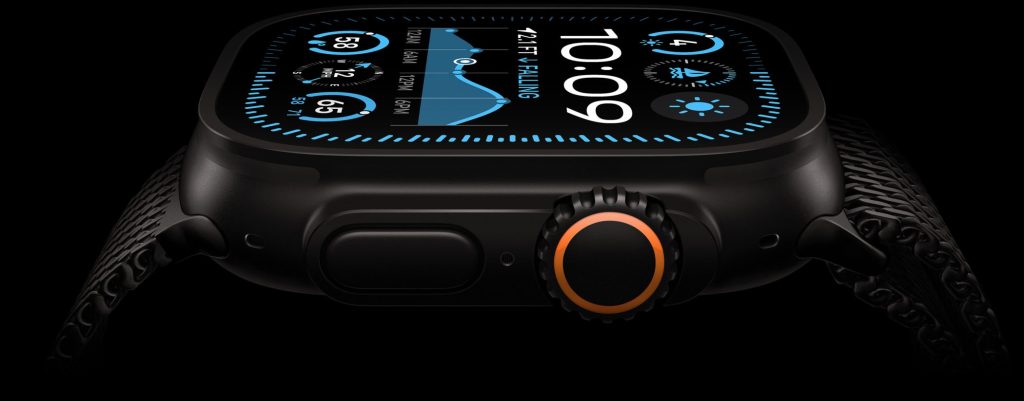
Yes, I once took that leap, Garmin to Apple in my case, and for a while I let the polish of the Apple Watch Ultra carry me. The interface is friendly. For day-to-day life, it’s relatively useful (but also very distracting). But endurance sport isn’t day-to-day life. It’s long swims, longer rides, and long hours doing whatever sport it is that you’re pursuing.
On the wrist, the Apple Watch Ultra can absolutely log a session. It counts laps, tracks heart rate, serves you a map, and plays music when you need it most. And if your world begins and ends inside Apple’s garden, it mostly works. The friction arrives the moment you need it to play with others. Endurance training is ecosystem work: watches, bike computers, chest straps, power meters, trainers, head units, clouds full of workouts and data, and the little conveniences that don’t headline a keynote but make or break a week.
Swimming was my first clue. The Ultra is water-worthy, but the feel in the pool and open water never felt like home base. Then came the bike. On long rides, battery anxiety crept in where I’d never felt it before. A six-hour endurance spin shouldn’t include power-management theater. And in races, I missed the tiny things that only matter once you’ve had them: extended display to mirror from the watch to the bike computer, seamless sensor sharing, the watch and head unit acting like an old married couple, predictable, communicative, unromantic in all the right ways.
Integration became a low-grade hassle. Pairing and re-pairing sensors. Massaging data into the right app. Living without the obscure but vital toggles that Garmin has accrued by catering to people who think a good Saturday is eight hours of sweat and logistics. Apple’s ecosystem does many things beautifully, but it doesn’t pretend to love niche endurance edge-cases. Garmin, for better and for wonderfully boring worse, does.
So I went back. Back to watches that just work with everything: bike computers, chest straps, power meters, indoor trainers, third-party apps. No elaborate setup, no translation layer. Back to software support that may not be pretty but is deep, and integrations that reach into nearly every endurance tool I actually use. Back to models that, depending on which you pick, disappear on the wrist, both in weight and in drama, and wake up a day later still ready for the run I forgot to start.
Could you make the Apple path work? Absolutely. Plenty of athletes do nowadays, especially for long distance running. But for my use, long rides, brick days, swims that need to be logged without fuss, and racing with a bike computer in the loop, the frictions accumulated. Not to mention, one more battery-powered device to recharge very frequently (unlike the Garmins and Polars of this world with their seemingly infinite battery life!). In an endurance context, reliability is a feature, and boring is beautiful. I also love a good old MIPS display over the more colorful Apple displays.
Watt I Learned
I wanted the best of both worlds and discovered that in endurance sport, worlds rarely split neatly. The Apple Watch Ultra does a lot right, but the moment my training spilled beyond Apple’s walls, small annoyances multiplied: swim feel and feedback that didn’t click, battery management on long rides that distracted from the ride itself, and a loss of little integrations, like extended display between watch and bike computer that I didn’t realize I relied on until they were gone. Garmin (and for that matter of course also Polar, Coros and the likes) isn’t glamorous, but it’s compatible, quietly lightweight depending on the model, and built for the messy, mixed stack of real training. If your week includes sensors, head units, long bricks, and data living in many places, the simplest life is often the Garmin life.


 WattsWrong
Leave a comment