

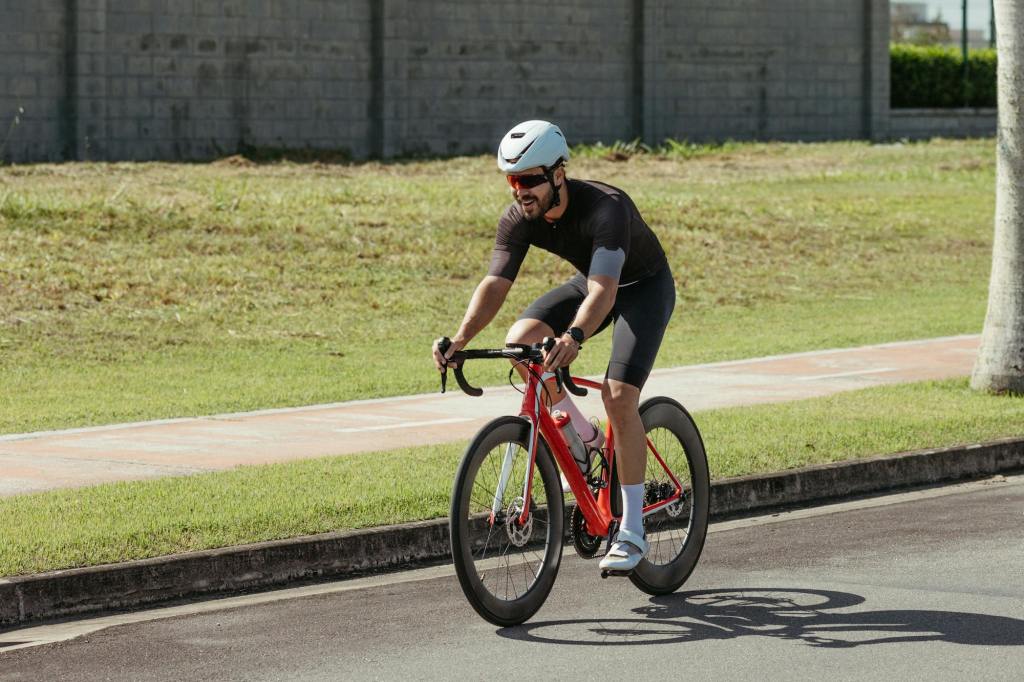
Getting lower on the bike is faster through the air. Everyone knows this,. I assume. But getting lower also changes how your body produces power, and not always for the better. Anyone with a less-than-optimal lower back and less-than-perfect core will understand where I’m coming from. An older but still relevant study looked directly at this conflict in time trial positions, and the findings are worth knowing. Basically, how low should you go and at what point is it too low, and do you lose power output?
The study examined different torso angles on a time trial bike and measured what happened to aerodynamic drag, power output, and metabolic efficiency at the same time. The core finding is simple: the flattest position, with the torso as horizontal as possible, gives the lowest aerodynamic drag. That part is not surprising. However, as the position flattens out, gross efficiency drops too. The body burns more energy to produce the same amount of power. So you are cutting through the air better, but you are also working harder to do it, and getting less out of each pedal stroke. Not to mention that to us mere mortals, our hip flexors start calling us bad names as well if we go a bit too deep for too long…
The researchers concluded that there is no single “best” position that wins on all fronts. Instead, there is a trade-off that depends on speed. At higher speeds, the aerodynamic savings from a flatter position are worth more because drag increases sharply with speed, so the reduced drag pays back more. At lower speeds, the aerodynamic benefit shrinks, and the cost to power output and efficiency starts to outweigh it.
The position that saves the most drag may cost enough in power and efficiency that the net result on finishing time is actually worse. The paper frames this as finding the optimal trade-off between the two conflicting demands, which varies depending on how fast you are riding.
For most amateur cyclists and triathletes, going as low as physically possible is not always the right answer. A position that is a few degrees more upright but allows you to breathe properly, generate good power, and hold the effort for the whole bike leg is arguably faster overall than a textbook aero tuck you cannot sustain or produce power from.
A bike fit that considers both aerodynamics and your ability to actually perform in that position is, once again, the most sensible investment before worrying about any other marginal gains. I know I mentioned this a couple of times before by now. No, I do not run a separate bike-fit business, but I do think a properly fitted bike makes a massive difference in comfort, and as a result also speed.
Source: Fintelman, D.M., Sterling, M., Hemida, H., Li, F.X. “Optimal cycling time trial position models: Aerodynamics versus power output and metabolic energy.” Journal of Biomechanics, 2014.




Leave a Reply